There’s something undeniably special about a coastline right after a storm. The air feels cleaner, the wind softens, and colours seem to return to the world. Wet sand glistens like polished glass and if you’re really lucky, a rainbow breaks through the clouds and turns an ordinary shoreline into something unforgettable.
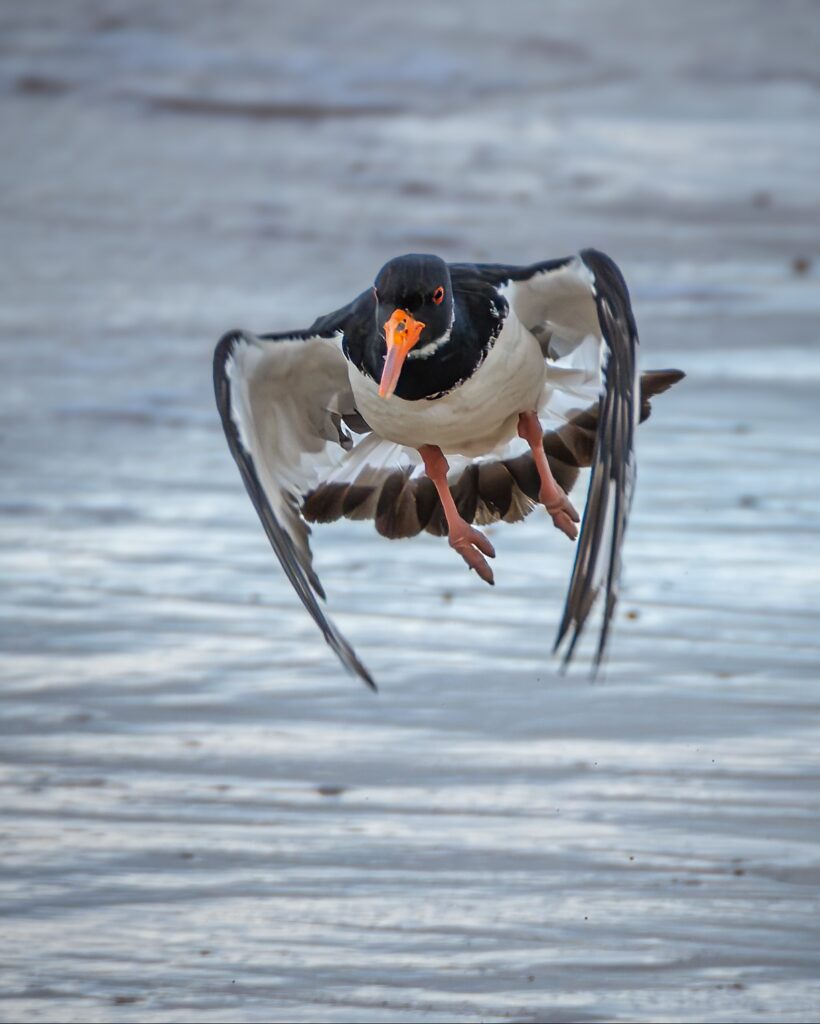
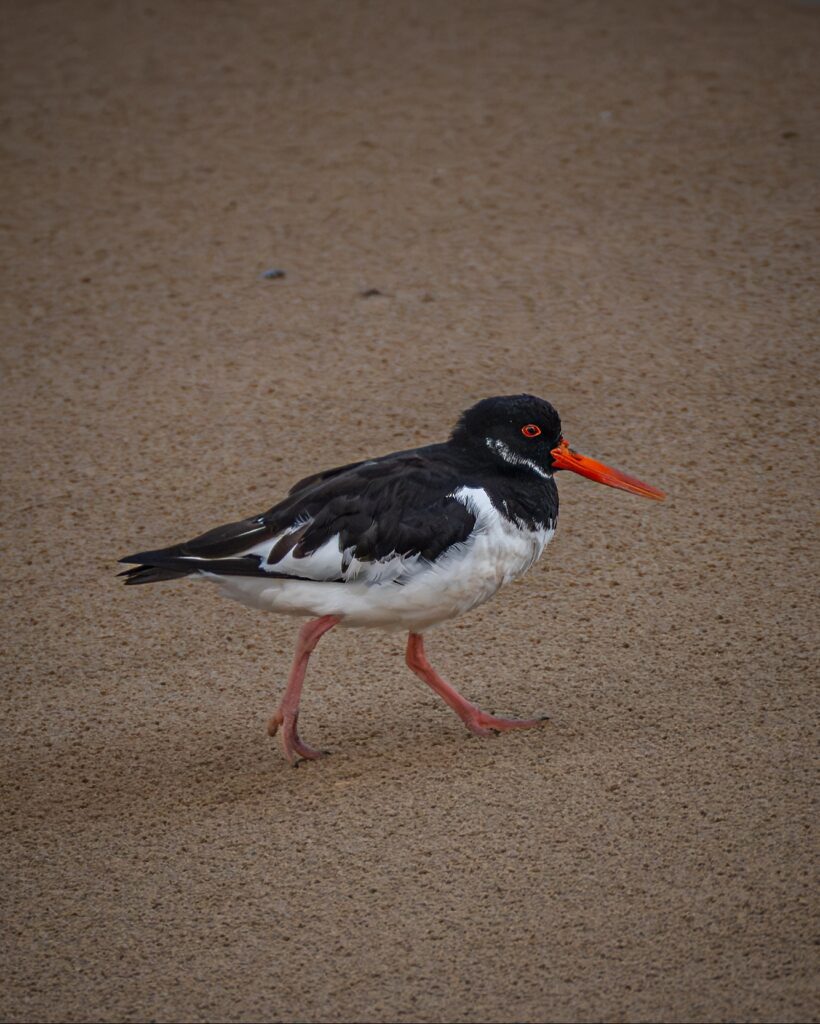
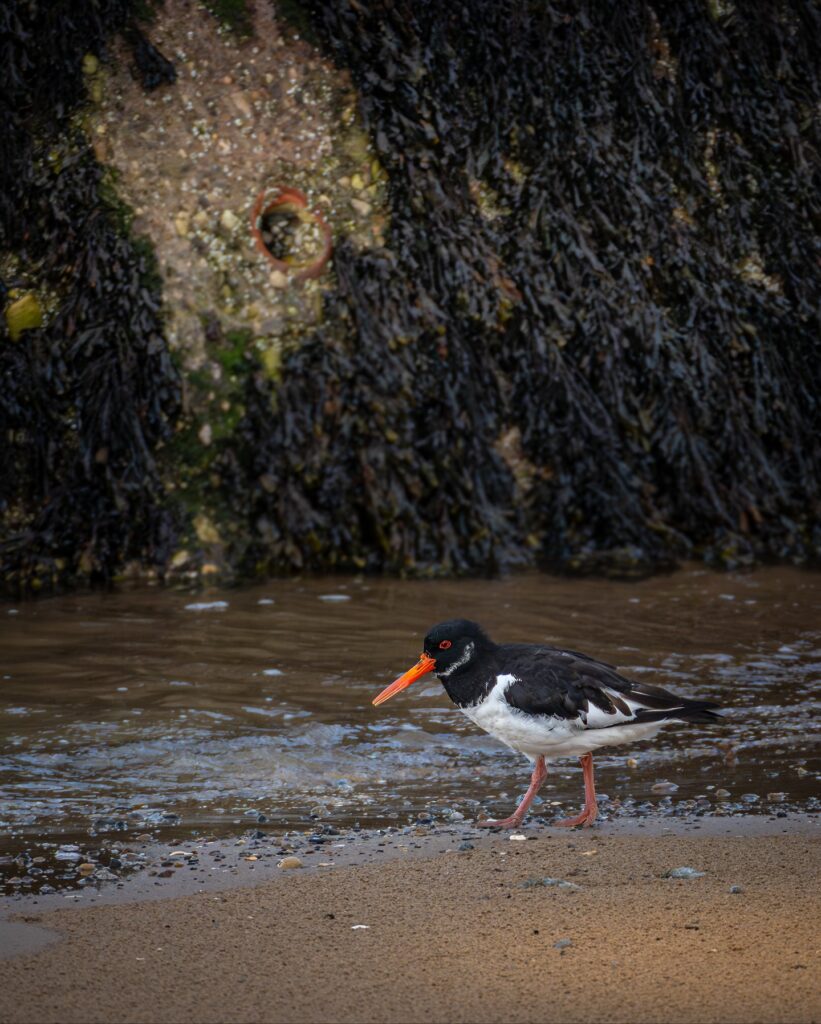
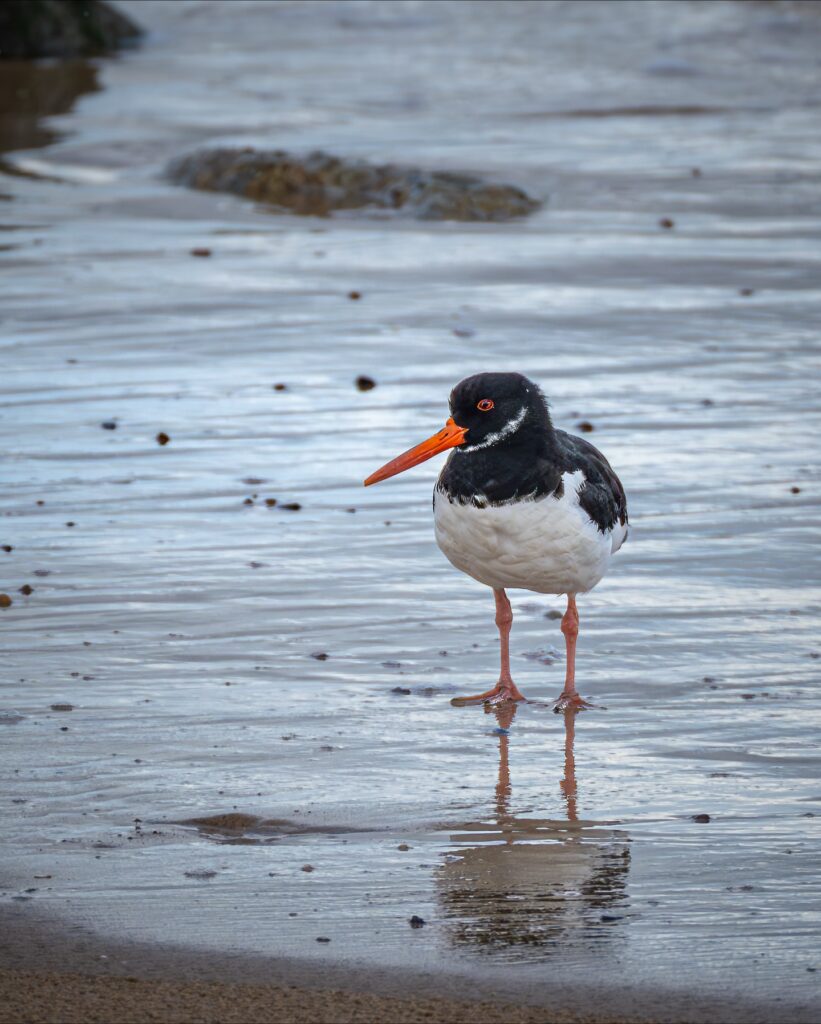
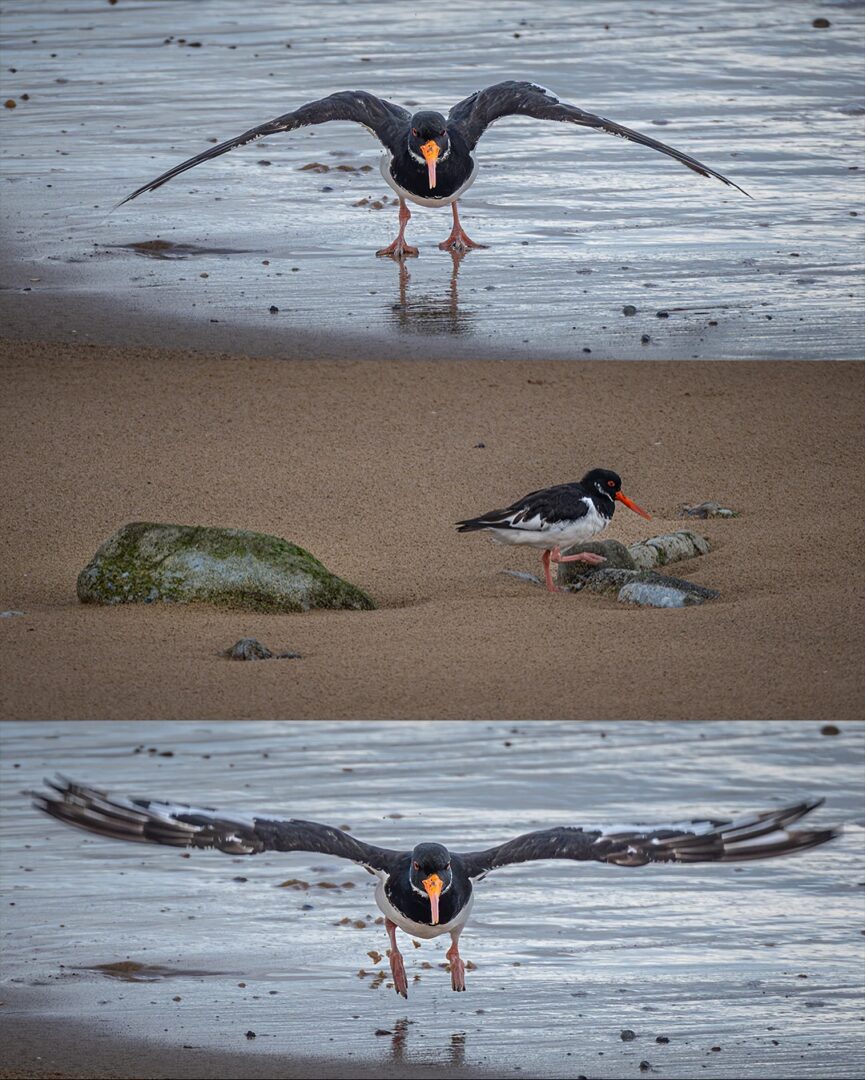
That was the scene when I headed out to photograph Eurasian Oystercatchers (Haematopus ostralegus) recently. These birds always bring a bit of drama to the beach. You hear them long before you see them: sharp, piping calls that cut through the air as they patrol the tideline. And then there’s that unmistakable look; black-and-white plumage, long orange-red bill, and eyes that seem permanently alert to the shifting waves.
Oystercatchers are built for coastal life. Their powerful, chisel-shaped bills allow them to prise open mussels, cockles, and clams with incredible accuracy. They’re patient hunters, often working methodically along the sand, tapping and testing shells before making their move. One of the things I love most about watching them is how deliberate everything is – every step, every strike of the bill, every moment of pause while they assess the next opportunity. In nature, patience and precision almost always pay off.
Although most people think of oystercatchers as strictly shoreline birds, they’re actually far more adaptable than that. In the UK, they breed on beaches, saltmarshes, rocky coasts, and even inland near rivers and lakes. Some populations migrate south in winter, while others remain year-round. They’re excellent parents too, defending their nests fiercely, and you’ll often see them mobbing much larger birds if they get too close.
On this particular day, there was more than just oystercatcher activity to enjoy. As the storm clouds drifted away, the sun hit the receding rain and a perfect rainbow arched over the surf. It felt like nature showing off, just a little. There’s something about those rare moments, when weather, wildlife, and light all come together, that reminds me why I spend so much time outdoors, camera ready, waiting.
I shot this encounter using the Sony α1 II paired with a 600mm GM lens and 1.4x teleconverter at 1/1600 sec, f/5.6, ISO 500 – fast enough to freeze the movement of the birds as they worked the shoreline. Later, I fine-tuned the images in Lightroom to bring out the colours of the bill and the rainbow in the background.
Storms may be unpredictable, but they often leave behind the best stories. Oystercatchers, rainbows, wet sand, and quiet wind; for me, that’s a perfect day of wildlife photography on the British coast.
INSTAGRAM
@paulbrowning.photography
@snowboard.paul
@macro.paul
TWITTER
@paul__browning_
FACEBOOK
@PaulBrowningPhotography
@snowboardpaul
@macro.paul.surrey
INSTAGRAM
@paulbrowning.photography
@snowboard.paul
@macro.paul
TWITTER
@paul__browning_
FACEBOOK
@PaulBrowningPhotography
@snowboardpaul
@macro.paul.surrey