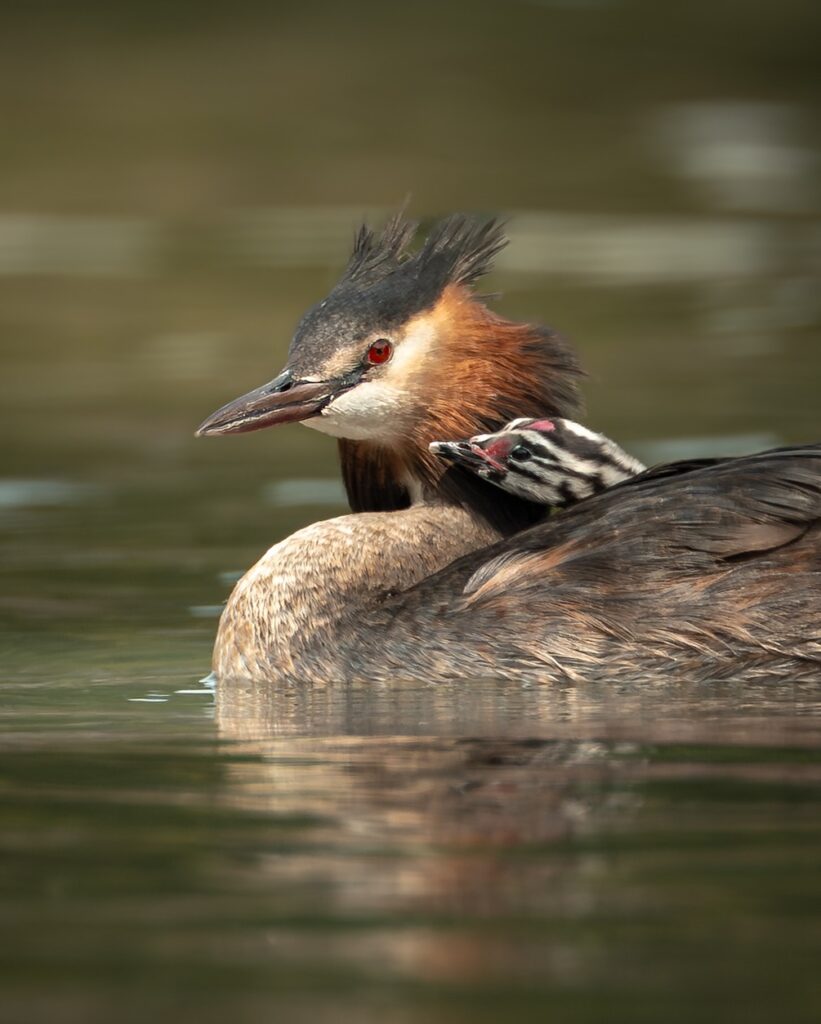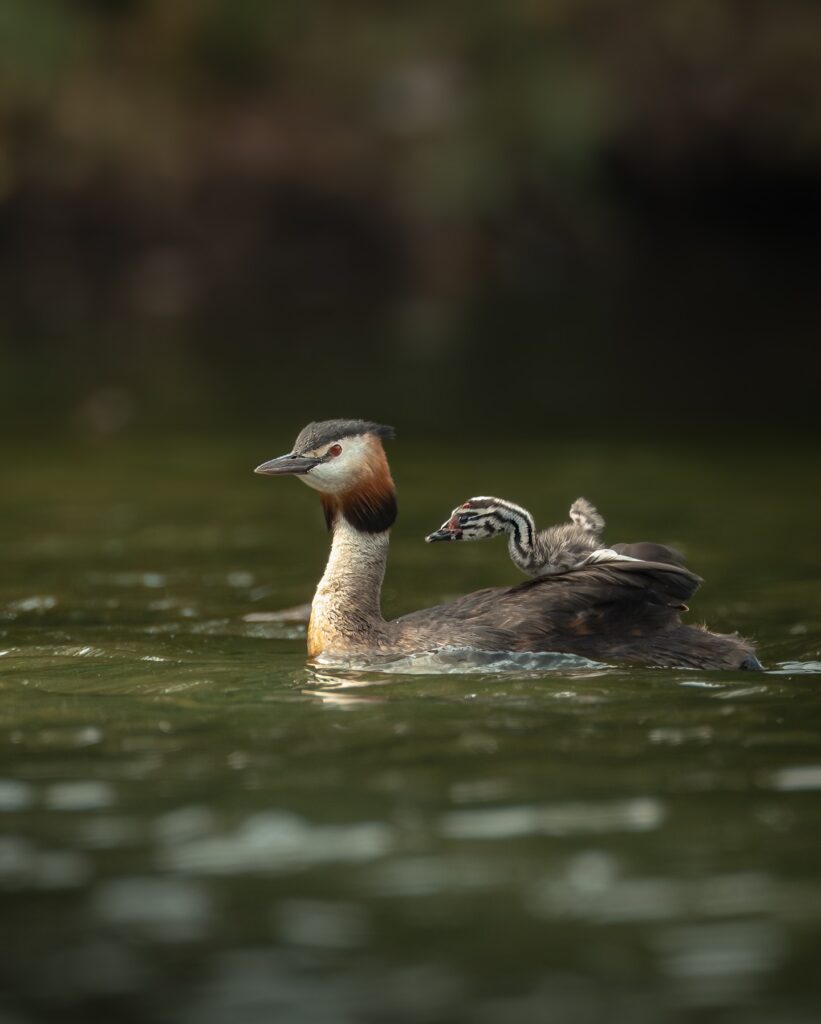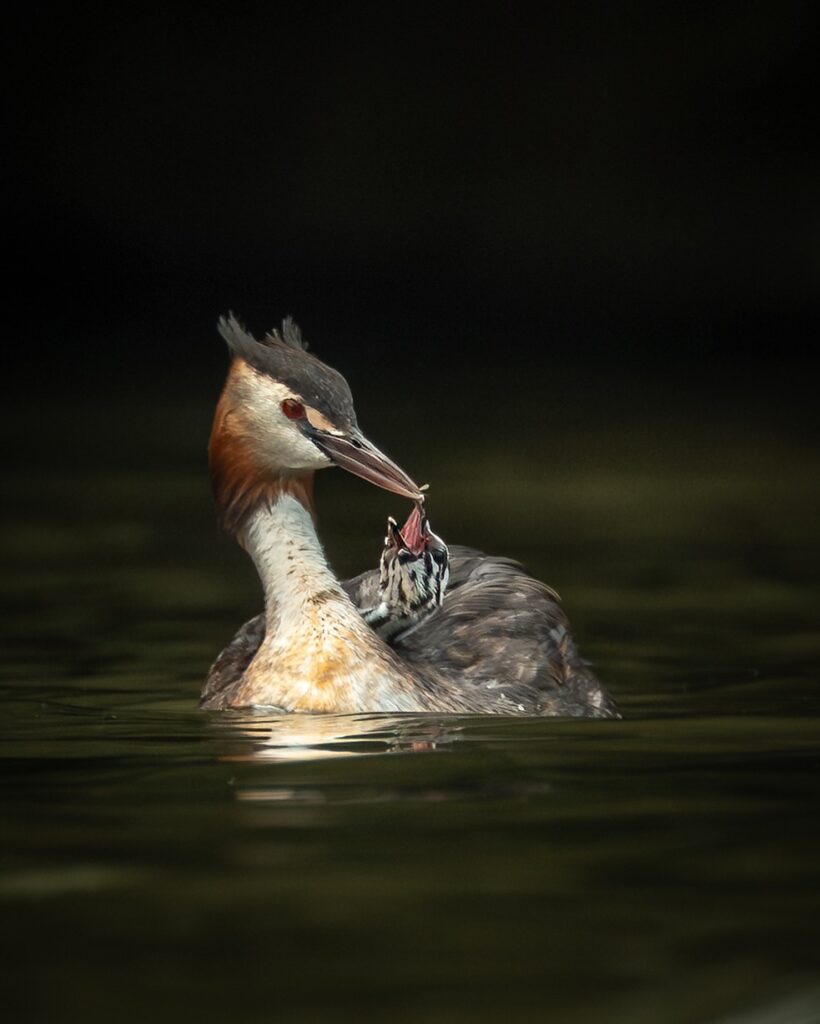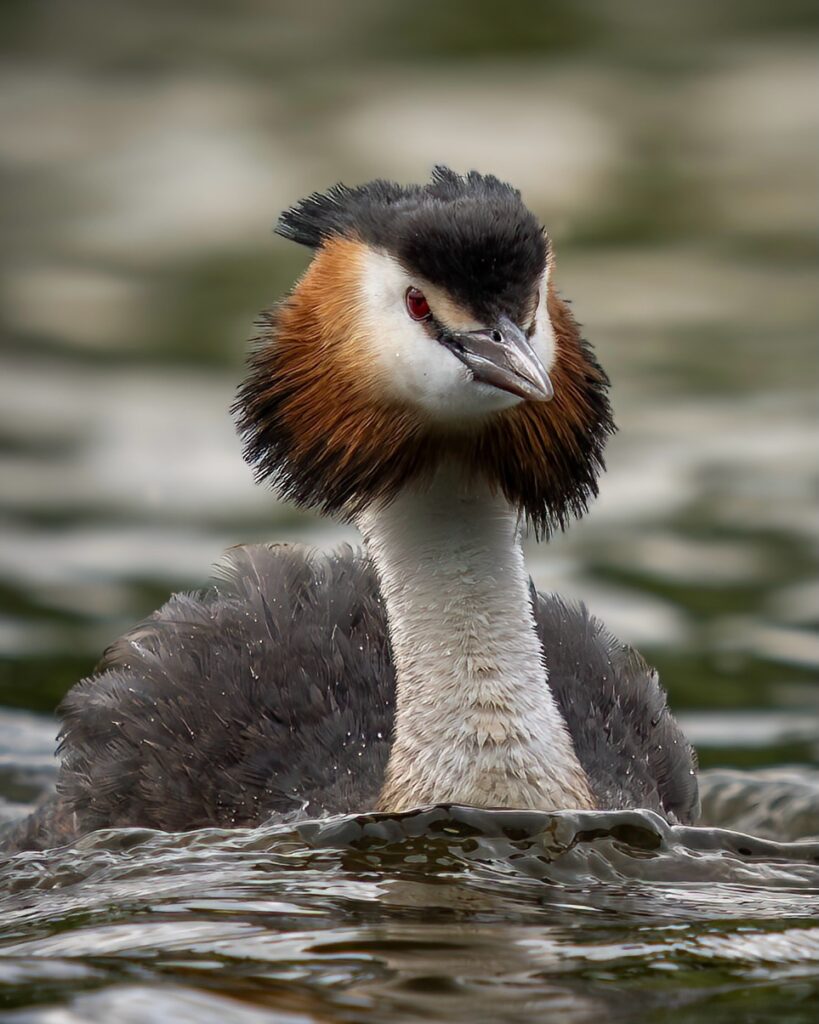
I’ve been following the same pair of great crested grebes (Podiceps cristatus) for six years now. It’s become something of a ritual, checking in on them each season, watching them court with their elaborate head-shaking displays, build their floating nests, and raise their young. This year, they’re raising their newest chicks, and after last season when only one made it to juvenile stage, it feels particularly special to see them back at it.
Great crested grebes face constant challenges. On this lake, it’s usually the heron that takes the small chicks, brutal, but all part of the natural order. However the parents are resilient, and fiercely protective. Watching them navigate parenthood year after year has been one of the most rewarding long-term observations of my photography career.
Great crested grebes are among the UK’s most elegant waterbirds. With their striking black head plumes, rufous neck frills, and piercing red eyes, they’re unmistakable during the breeding season. These birds are almost entirely aquatic, building floating nests anchored to reeds and spending most of their lives on the water. They’re expert divers, plunging beneath the surface to catch fish with remarkable speed and precision.
During the breeding season, their courtship displays are famous; synchronised head-shaking, mirrored postures, and the presentation of water weed as gifts. It’s theatrical, and a privilege to witness, but what stays with me most is watching them with their young.
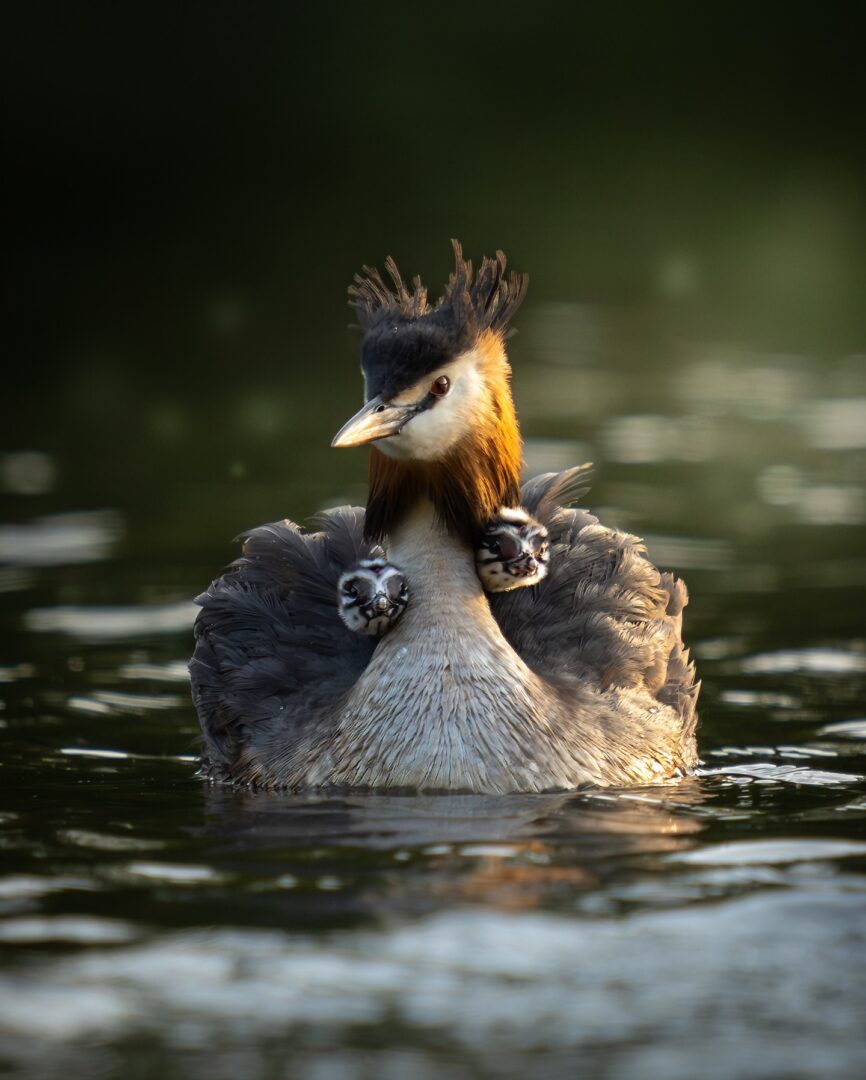
Great crested grebe chicks often ride on their parents’ backs for warmth and protection during their first days of life. Their striped plumage helps them blend into the reeds, but tucked into their parent’s feathers, they’re safe from predators and the cold. Watching a chick nestle into its mother’s back, peering out cautiously at the world, is one of those moments that reminds you why you spend hours by the water’s edge.
On this particular evening, as the sun set over the lake in Berkshire, I watched one of the young grebes staying close to its mother, nestled in her feathers, looking to her for protection, guidance, and comfort. It struck me how universal that instinct is, how even as we grow, we still look to the people who raised us for love, help, and encouragement. It reminded me of my own mum and that even though I’m bigger in size now, I still look up to her in the same way this young grebe leans on its parent.
I kept my distance for this shot, using the Sony α1 with a 400mm lens and 2x teleconverter (giving me 800mm reach) at 1/2000 sec, f/5.6, ISO 3200. Not the sharpest setup, teleconverters soften the image slightly, and the high ISO introduces noise but moments like this matter far more than technical perfection. Staying well back meant I didn’t disturb them, and that’s always the priority.
Six years of watching this pair has taught me patience, respect, and the value of showing up. Not every season goes smoothly and not every chick survives; but the keep caring for their young with a dedication that’s humbling to witness.
Sometimes the best shots aren’t the sharpest ones. Sometimes they’re the ones that remind you why you’re out there in the first place … bearing witness to life unfolding quietly on the water, one family at a time.
Register for my newsletter to receive workshop updates, the latest tuition, talks and presentations, as well as insights into where I will be travelling next and what I will be hoping to photograph!