• HOME
  • PR & Sponsorship
  • Galleries
    • Macro
    • Landscapes
    • Animals & Wildlife
    • Sports
      • Snowsports
      • Team Sports
  • SHOP
    • Lightroom Presets
    • Prints
    • Clothing
  • WORKSHOPS
  • PRESS
  • Collaborations
  • BLOG
    • Nature & Wildlife
    • Latest News
    • Tutorials
    • Workshops
  • Contact
  • HOME
  • PR & Sponsorship
  • Galleries
    • Macro
    • Landscapes
    • Animals & Wildlife
    • Sports
      • Snowsports
      • Team Sports
  • SHOP
    • Lightroom Presets
    • Prints
    • Clothing
  • WORKSHOPS
  • PRESS
  • Collaborations
  • BLOG
    • Nature & Wildlife
    • Latest News
    • Tutorials
    • Workshops
  • Contact
Whispers in the Reeds – Photographing the Bearded Reedling
30 January 2026
in Blog+Nature

Whispers in the Reeds – Photographing the Bearded Reedling

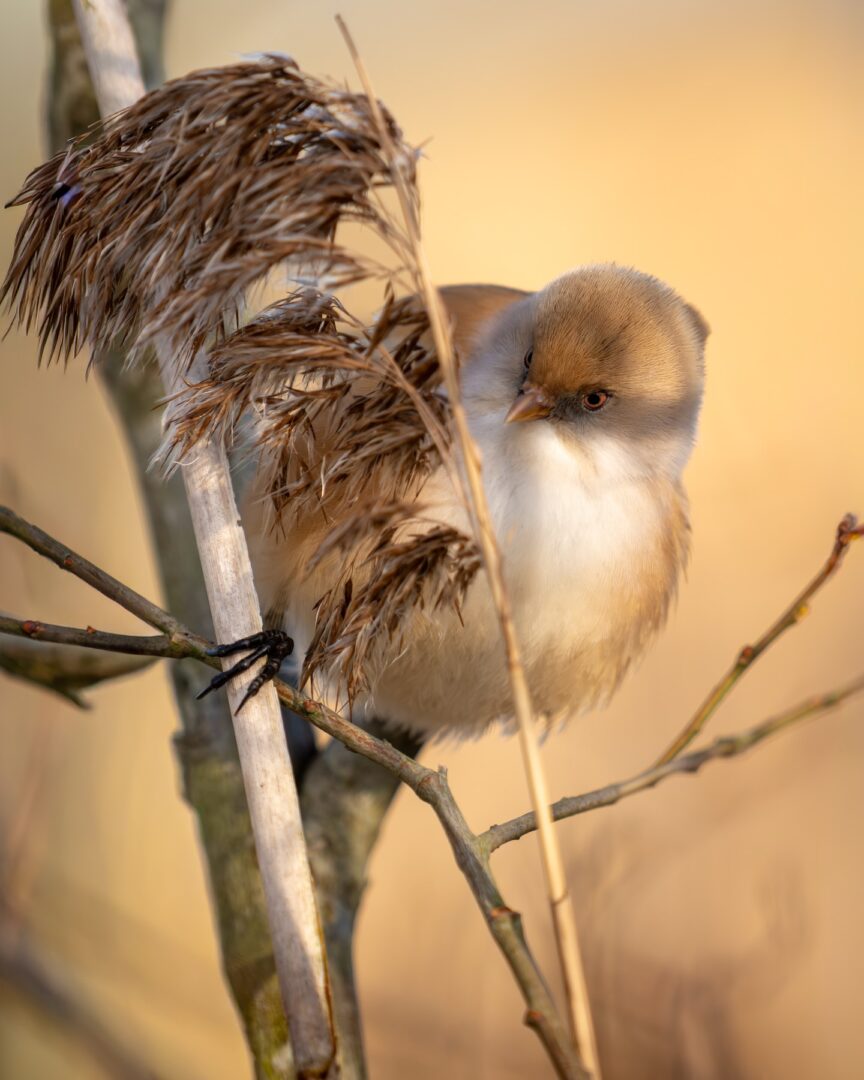
For the last three mornings, I’ve been at RSPB Leighton Moss from 8am, moving slowly and quietly along the reedbeds, hoping for a glimpse of one of the UK’s most beautiful and elusive birds, the bearded reedling (Panurus biarmicus). It’s the kind of bird that draws you in with promise and then tests your patience at every turn.

Bearded reedlings are masters of concealment. Despite their delicate beauty, they’re perfectly adapted to life deep within dense reedbeds, where they move low and fast, often revealing themselves only for a heartbeat before slipping back into cover. Their presence is usually announced by soft contact calls, a gentle ‘ping’ that carries just far enough to keep you guessing.

Life in the Reedbeds

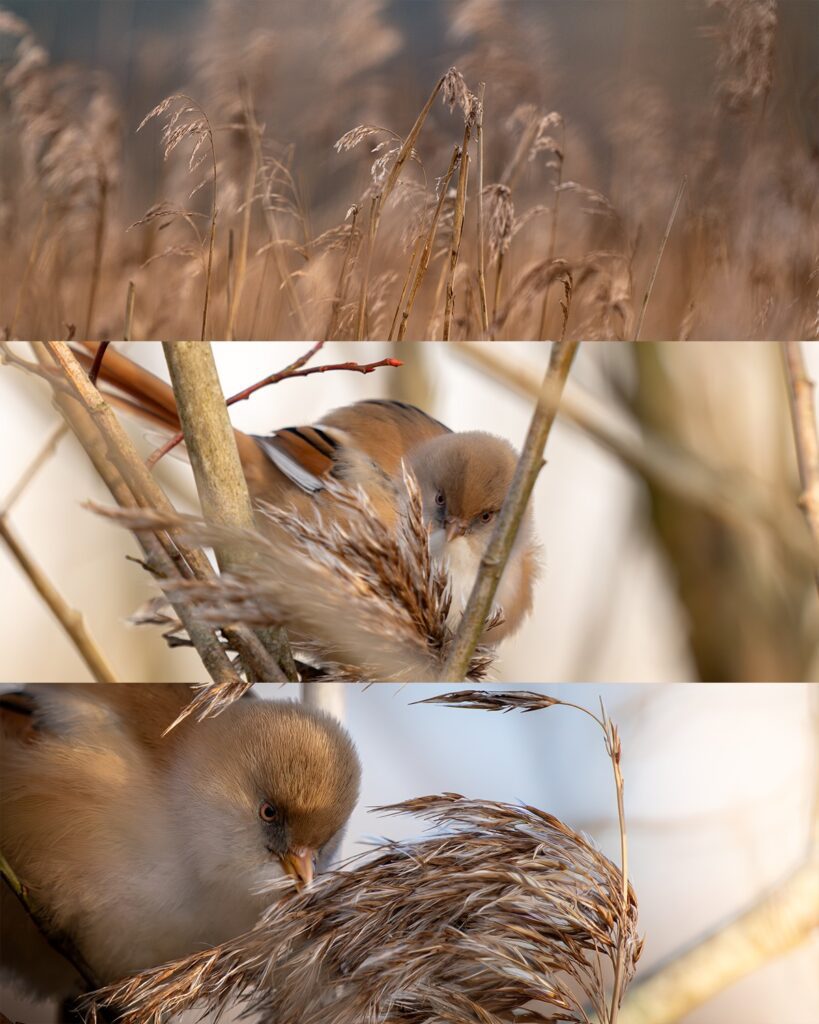
Bearded reedlings are almost entirely dependent on extensive reedbeds, making wetlands like Leighton Moss vital to their survival. During the breeding season, they feed largely on insects, spiders, and other invertebrates found among the reeds. In winter, their diet shifts dramatically to reed seeds, which they expertly extract with their fine, pointed bills.

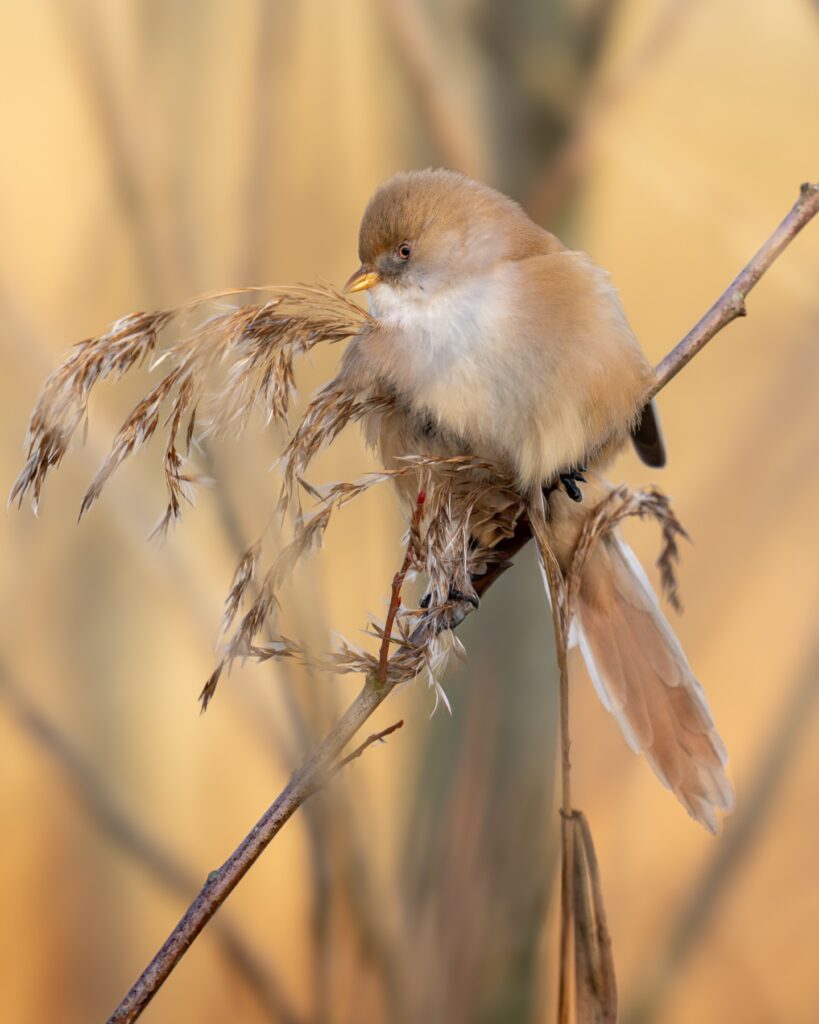
They’re highly social birds, often moving in small flocks outside the breeding season. Males are instantly recognisable by their slate-grey heads and distinctive black ‘moustaches’, while females are softer in colour, warm browns and creams that blend seamlessly into the reeds. On this visit, it was the females that offered me fleeting opportunities, while the bearded males remained frustratingly out of sight.

The Search

Over three mornings, I worked the same stretches of reedbed, slowly learning the rhythm of the birds and the way the light filtered through the stems. Wildlife photography often isn’t about chasing; it’s about listening, waiting, and trusting the process. I stayed low, moved deliberately, and let the reeds dictate the pace.

When the birds did appear, it was never for long. A brief perch on a reed stem or a quick hop between stalks. Just enough time to raise the camera, lock focus, and hope everything aligned. Some mornings reward you with everything; others give you just part of the story. And sometimes, the search itself becomes the most meaningful part of the experience.

The Moment

Although I didn’t see a male this time (the one with the famous ‘beard’) spending time with the females was a privilege in itself. Watching them balance effortlessly on swaying reed stems, completely at home in an environment that feels chaotic to us, is a reminder of how specialised and fragile these ecosystems are.

I photographed these moments using the Sony α1 II, paired with a 400mm GM lens and 1.4x teleconverter, shooting at 1/800 sec, f/4, ISO 500. The setup gave me enough reach and speed to work discreetly without disturbing the birds. Later, I refined the images in Lightroom, keeping the colours natural and true to the soft tones of the reedbeds.

Final Thoughts

Bearded reedlings aren’t a bird you simply turn up and photograph. They make you work for it and that’s exactly why encounters with them feel so special. Even without the male’s iconic beard, these mornings at Leighton Moss were a reminder that wildlife photography isn’t always about ticking boxes; it’s about immersion, patience, and appreciating whatever the wild chooses to show you.

Sometimes you get everything. Sometimes you get part of the story. And sometimes, the quiet search through the reeds is the reward.

Tagged In nature, nature photography, paul browning, photography, wildlife
Share This Post Facebook Twitter Pinterest
Prev Post After the Storm – Photographing the Eurasian Oystercatcher
Next Post Crowned in the Pines – Photographing the Crested Tit
You may also like
Reed Buntings in the Fields of Yorkshire
14 July 2025
in Nature

Reed Buntings in the Fields of Yorkshire

There’s something about the stillness of an open field in early spring that always pulls me in. On this recent trip to Yorkshire
Where to photograph Atlantic Puffins in the UK
29 March 2023
in Blog+Nature

Where to photograph Atlantic Puffins in the UK

Where to Photograph Atlantic Puffins in the UK Atlantic puffin (Fratercula artica) GB Population 580,000 pairsLength 26-29cm Wings
Photographing Red Deer In Great Britain
29 March 2023
in Nature

Photographing Red Deer In Great Britain

Photographing Red Deer In Great Britain Red deer (Cervus Elaphus) GB population 350,000Height 110-120cm Weight unto 225kg Lifespan
Categories
  • Blog
  • Nature
  • Tutorials
  • Workshops
Featured Posts
Fleeting Encounters – Photographing the Short-eared Owl at Bempton Cliffs
6 May 2026
Feathers and Families – Photographing the Great Crested Grebe
10 April 2026
Crowned in the Pines – Photographing the Crested Tit
3 March 2026
Whispers in the Reeds – Photographing the Bearded Reedling
30 January 2026
After the Storm – Photographing the Eurasian Oystercatcher
8 December 2025
The Mysterious Raccoon Dog
19 November 2025
GET SOCIAL

INSTAGRAM
@paulbrowning.photography
@snowboard.paul
@macro.paul

X
@paul__browning_

FACEBOOK
@paulbrowning.photography
@snowboardpaul
@macro.paul.surrey

Get in Touch

+44 7956 644 415

info@paulbrowning.photography

Terms & Privacy Policy
Refund Policy

Find me on Insta

GET SOCIAL

INSTAGRAM
@paulbrowning.photography
@snowboard.paul
@macro.paul

X
@paul__browning_

FACEBOOK
@paulbrowning.photography
@snowboardpaul
@macro.paul.surrey

Latest Posts
Photographing Gannets at Bempton Cliffs: A Graceful Return
Feathers and Families – Photographing the Great Crested Grebe
Chasing Blue Tits in the Blossoms: A Springtime Obsession
© 2023 Paul Browning Photography. All Rights Reserved. Web Design by Kraft Space.

Sign up to our newsletter

Register for my newsletter to receive workshop updates, the latest tuition, talks and presentations, as well as insights into where I will be travelling next and what I will be hoping to photograph!