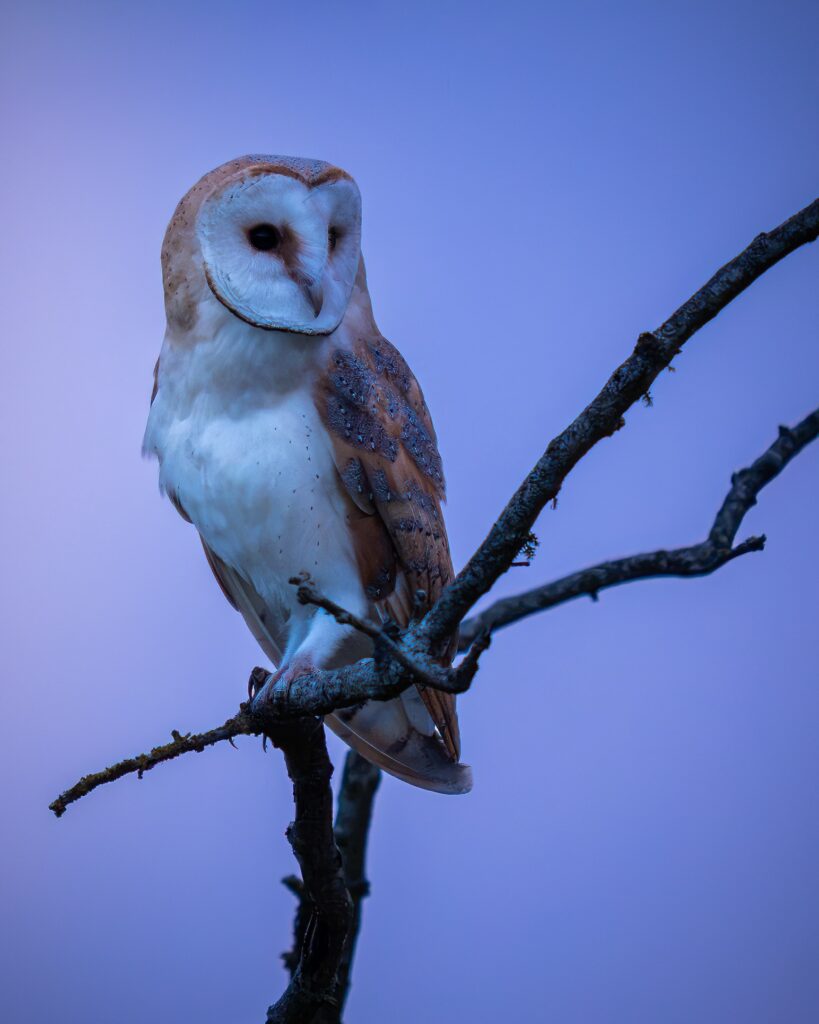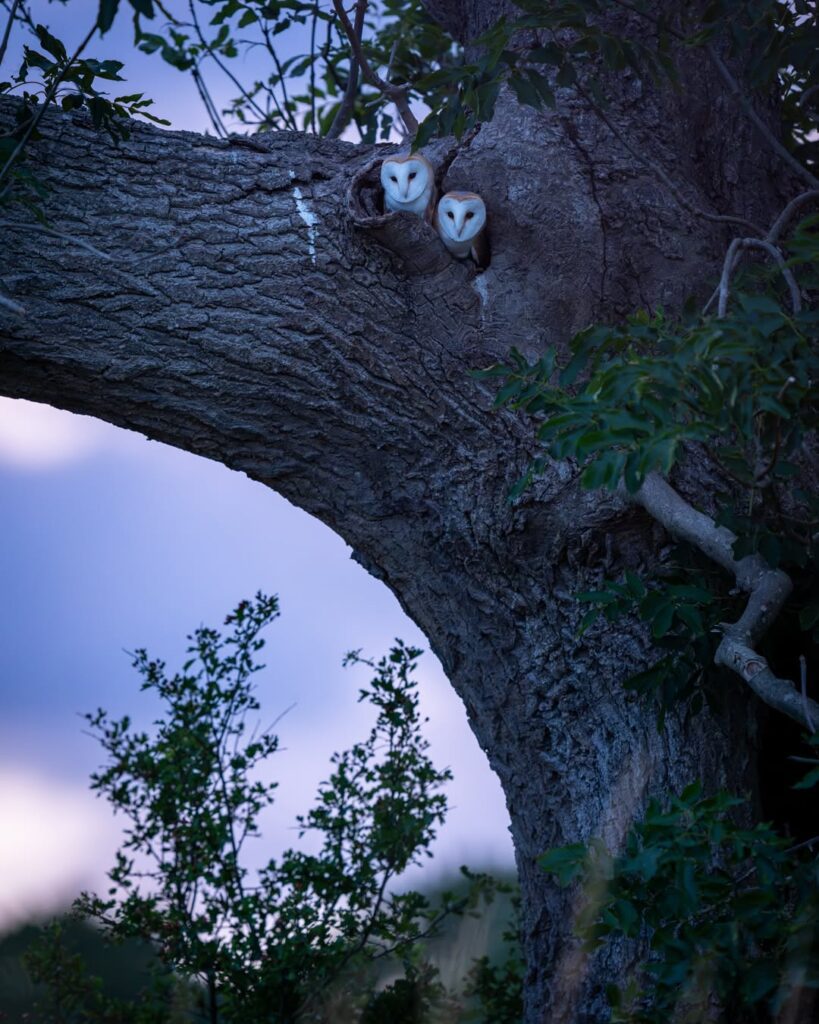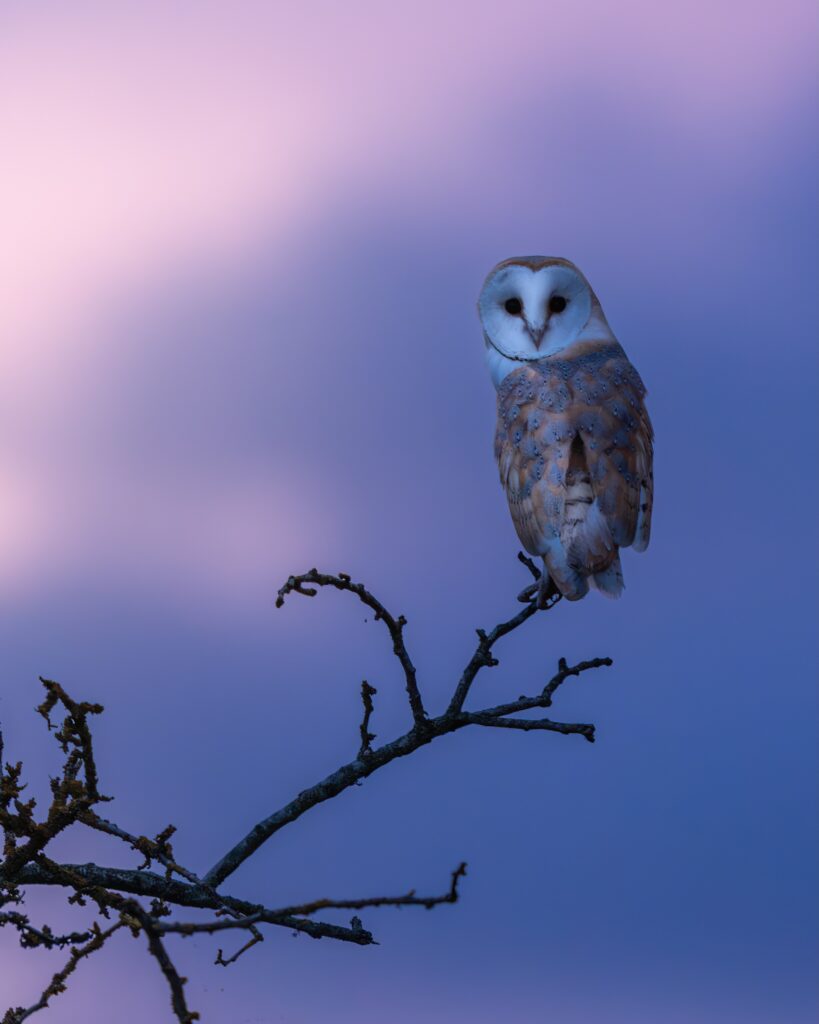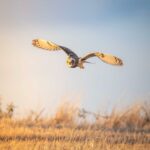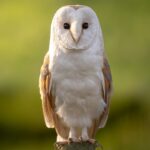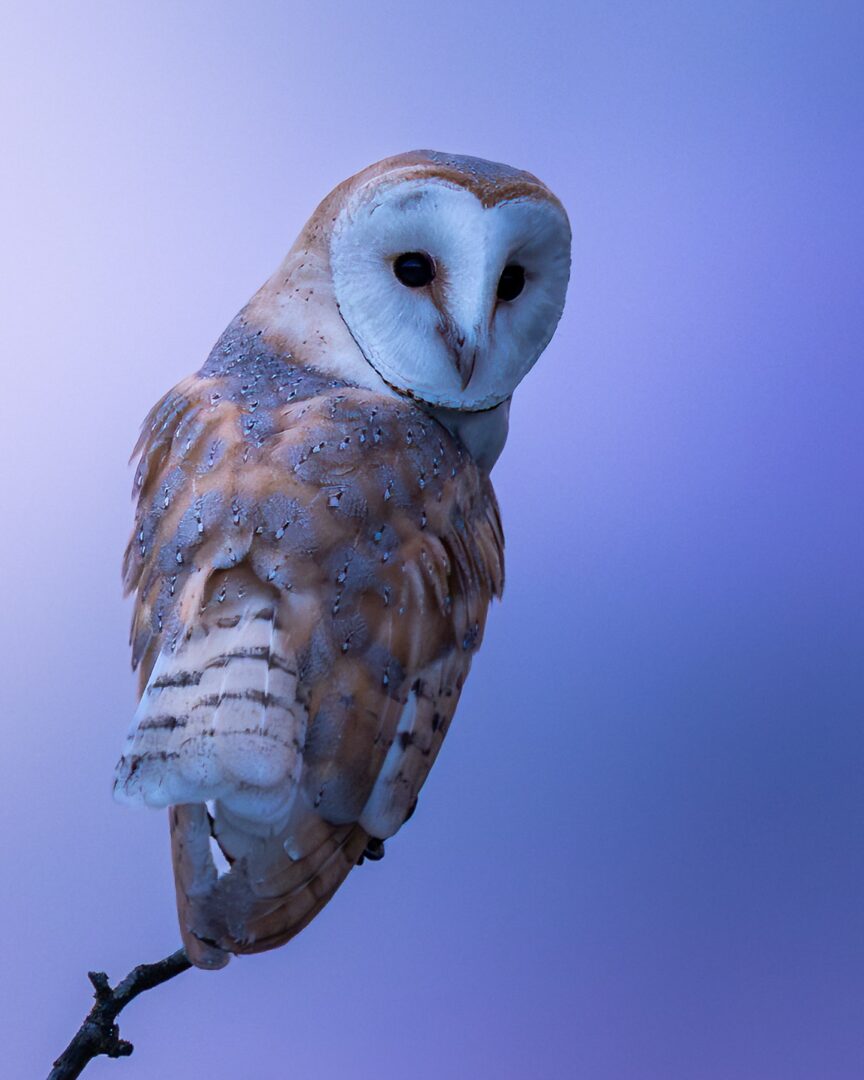
For over two weeks, I had been following these young barn owls, learning their movements and quietly waiting for moments like this. It’s the kind of patience that defines wildlife photography, showing up day after day, watching, waiting and understanding the rhythm of their lives before the moment you’re hoping for arrives.
One evening, just as I thought it was time to pack up, the grey Northumberland skies suddenly opened into the most incredible shades of pink and blue. The light transformed everything and in that moment, two of the young owls took their first flights between the trees, calling to one another before each returned to its perch.
I was lying completely still in the long grass, hardly daring to breathe, watching one of the most unforgettable wildlife moments I’ve ever experienced unfold in front of me.
Barn owls (Tyto alba) are among Britain’s most iconic raptors, and watching young birds fledge is witnessing a critical transition. These owls nest in barns, church towers, tree cavities, and nest boxes, anywhere with a secure, sheltered space. The chicks grow rapidly, developing their distinctive pale, heart-shaped faces and powerful hunting instincts.
Fledging typically occurs in late summer, when young owls are around 50-60 days old. They don’t leave the nest fully independent, instead, they make experimental flights, practicing the precise maneuvers they’ll need to hunt. These early flights are tentative, often between nearby perches or low over the ground. The calls between siblings are part of bonding and communication as they prepare for independence.
Within weeks, these young owls will establish their own territories, dispersing across the countryside in search of hunting grounds. By winter, they’re often miles away, and the chances of seeing them at their natal site again are slim. This brief window, where they’re still semi-dependent but beginning to explore, is fleeting and precious.
I’d positioned myself carefully in the long grass hours before, knowing the evening light would be crucial. The grey skies had been persistent all day, and I’d almost resigned myself to a quiet evening. But then the clouds parted, and the light shifted to those incredible pinks and blues, the kind of light photographers dream about.
The young owls, sensing the change in light and temperature, became active. Their first real flights between the trees were tentative but purposeful. They called to each other, high-pitched contact calls that echoed across the fields. Each one returned to a secure perch after each attempt, gathering confidence.
I captured these moments using the Sony α1 with settings that allowed me to work from distance without disturbing them but in honesty, the photograph matters less than the privilege of witnessing it.
In a few weeks, these young owls will leave to establish territories of their own. By the time I return to Northumberland in winter, they’ll almost certainly be gone. Dispersed across the region, hunting over fields I may never visit, living lives I’ll never see.
It felt like the perfect goodbye, watching them test their wings in that extraordinary light, calling to their siblings, preparing for a life of independence. This is what fledging really is, the end of one chapter and the beginning of another. I was just lucky enough to witness the moment the page turned.
Register for my newsletter to receive workshop updates, the latest tuition, talks and presentations, as well as insights into where I will be travelling next and what I will be hoping to photograph!