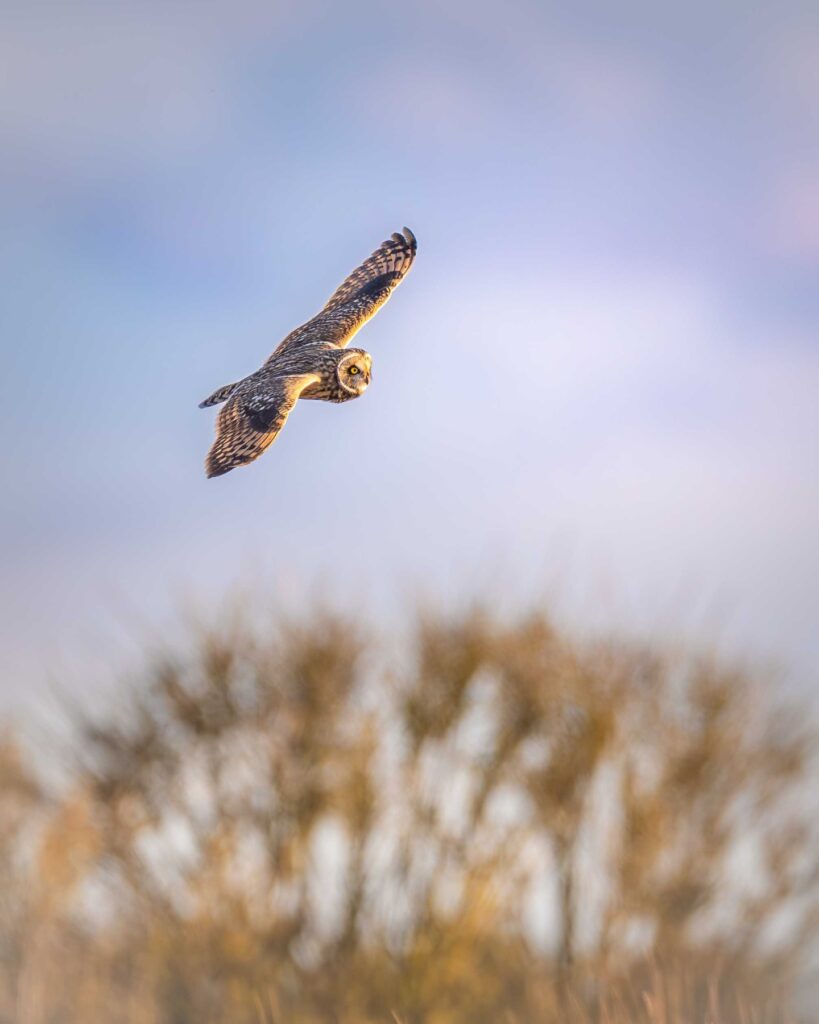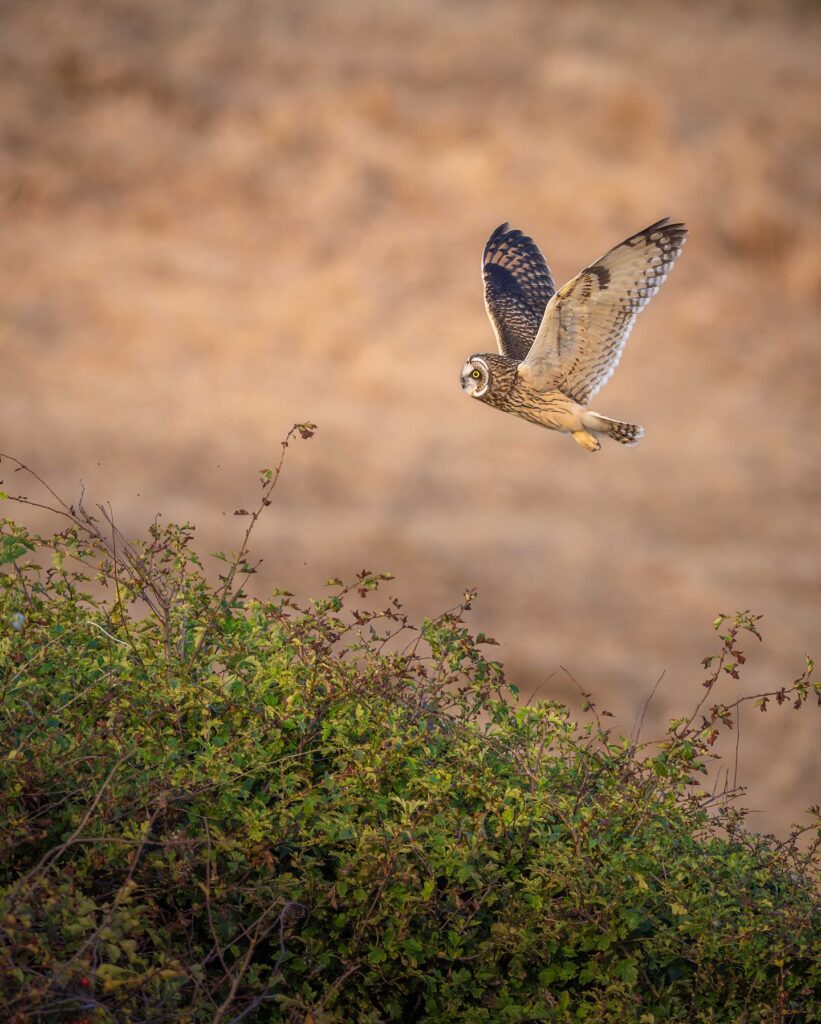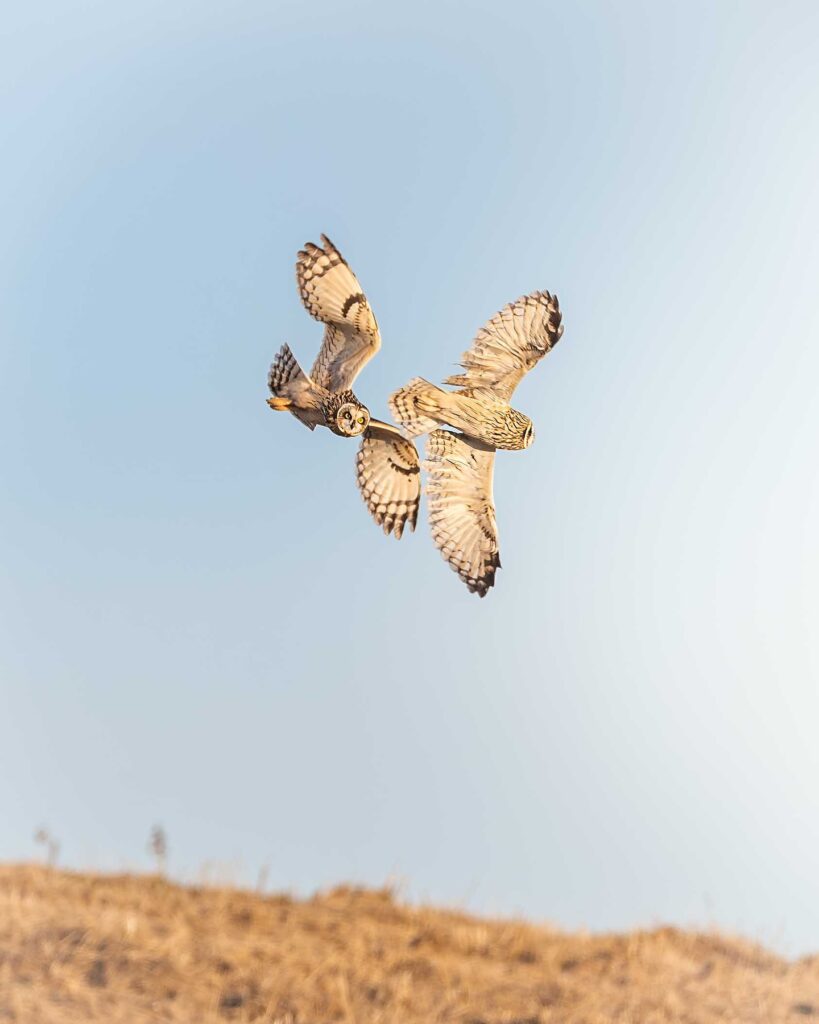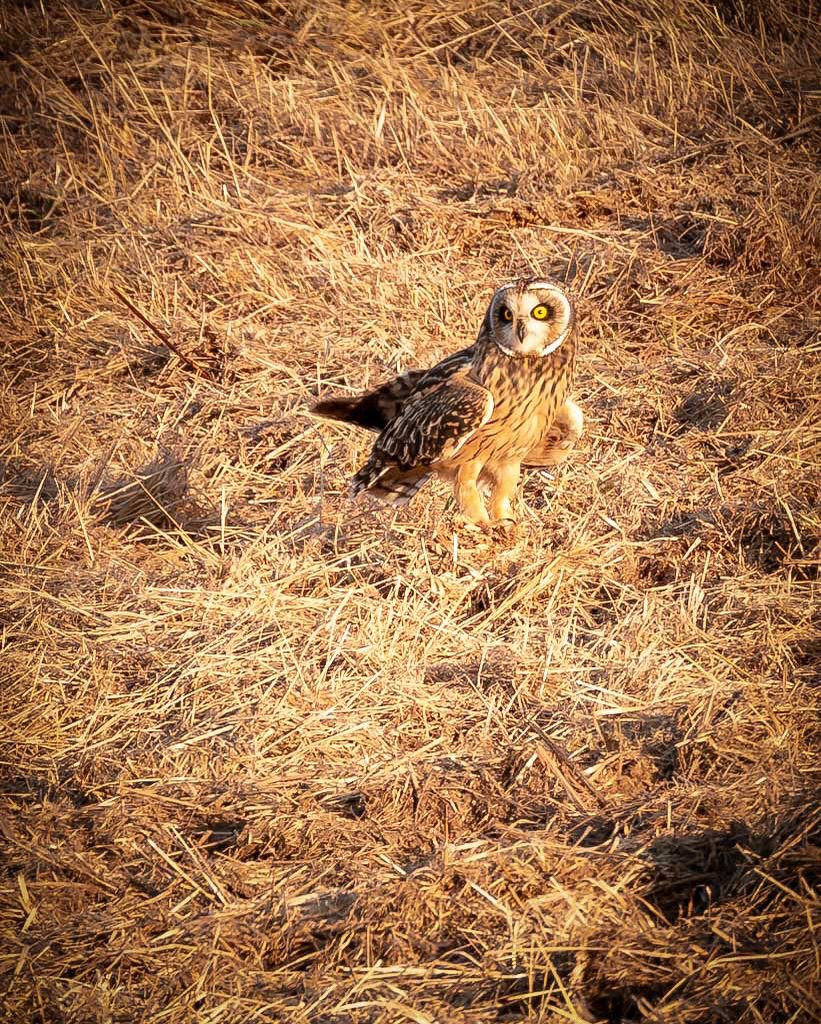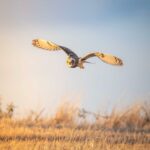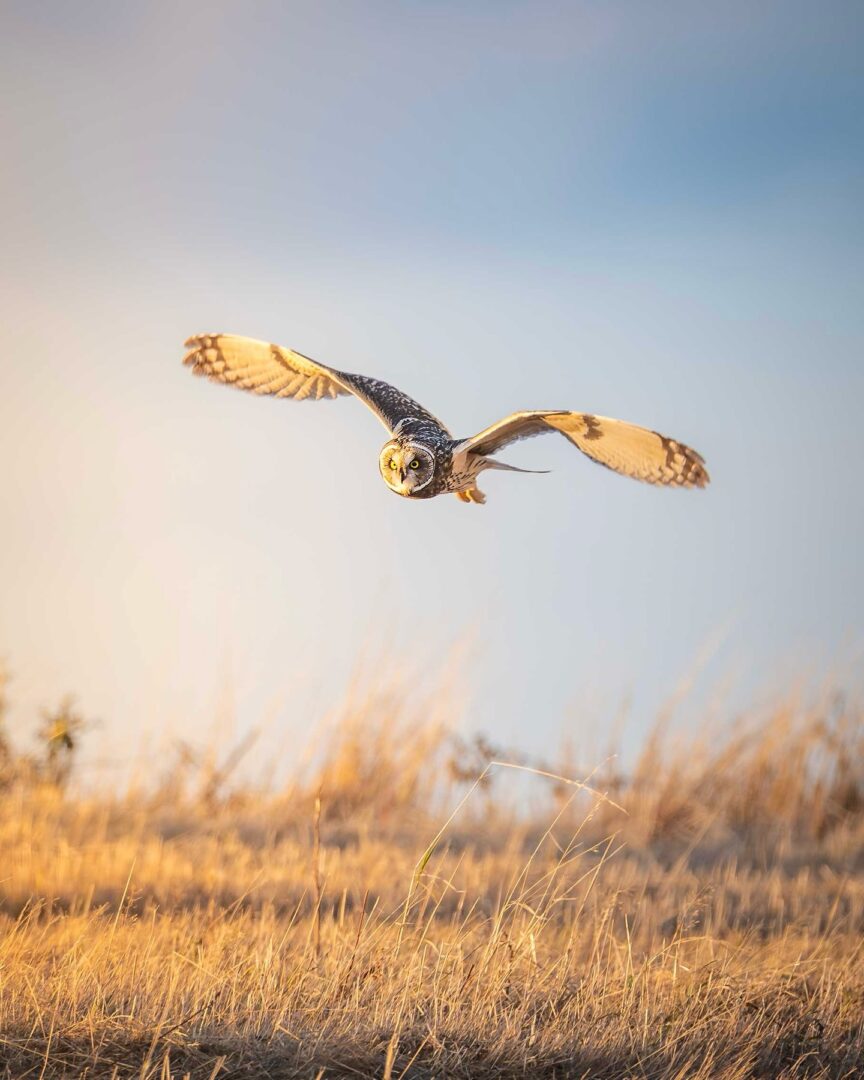
Some time ago at Bempton Cliffs, I had one of those moments that takes your breath away. Four different short-eared owls (Asio flammeus) were hunting across the fields as the sun went down. The light was perfect, the birds were active, and I couldn’t quite believe my luck. I got so excited that I invited my Instagram followers to join me the following night to share the experience.
The next evening, several people turned up and while it was awesome to meet some of you in person and put faces to names, the owls didn’t show. A little embarrassing, maybe, but still such a cool experience to share an evening outdoors together, cameras ready, hoping for that same magic.
Afterwards, I learned why the owls had vanished. The farmer who usually kept that field wild had just mowed it, and two days later it was ploughed. Looking back at my images from that first evening, it suddenly made sense. The owls were flying low and landing in odd spots, probably disturbed from the ground rather than actively hunting prey. It was a reminder of how fragile and unpredictable these encounters can be, and how much they depend on the way we manage the land.
Short-eared owls are one of the UK’s most distinctive owl species, instantly recognisable by their piercing yellow eyes, mottled brown plumage, and those short ear tufts that give them their name. Unlike most owls, they’re largely diurnal – hunting during the day and at dusk, quartering low over open grassland, moorland, and coastal marshes in search of small mammals, particularly voles.
They’re ground-nesters, laying their eggs in shallow scrapes hidden among rough vegetation. This makes them particularly vulnerable to habitat disturbance. When grassland is mowed, ploughed, or converted, the owls lose both their hunting grounds and their nesting sites. In winter, short-eared owls are often seen around coastal areas like Bempton, where they hunt over clifftop fields and rough pasture.
Their flight is buoyant and moth-like, with deep, slow wingbeats that allow them to cover ground methodically, scanning for movement below. Watching them quarter a field at sunset is mesmerising; silent, focused, and utterly at home in the fading light.
On that first evening, the four owls worked the field independently, each covering their own patch of ground. The low sun lit their wings from behind, highlighting every feather as they banked and turned. I shot these moments using the Sony α1 II with a 600mm GM lens at 1/2000 sec, f/4, ISO 500. Fast enough to freeze their motion while keeping the background soft. Later, I fine-tuned the images in Lightroom, bringing out the warmth of the light and the detail in their plumage.
Short-eared owls are a reminder that wildlife doesn’t exist in isolation. Their presence depends on the landscape around them, how it’s managed, what’s growing, and whether there’s space left for the wild. That evening at Bempton was unforgettable, but it was also fleeting. Two days later, the field was gone, and so were the owls.
These encounters are gifts; they’re unpredictable, temporary, and shaped by forces beyond our control. All we can do is show up, stay patient, and appreciate them while they last … even if they don’t repeat on demand.
Register for my newsletter to receive workshop updates, the latest tuition, talks and presentations, as well as insights into where I will be travelling next and what I will be hoping to photograph!