There are evenings you remember because of the photographs and then there are evenings you remember because you felt completely immersed in another world. This was one of the latter.
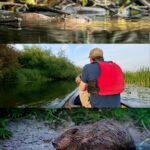
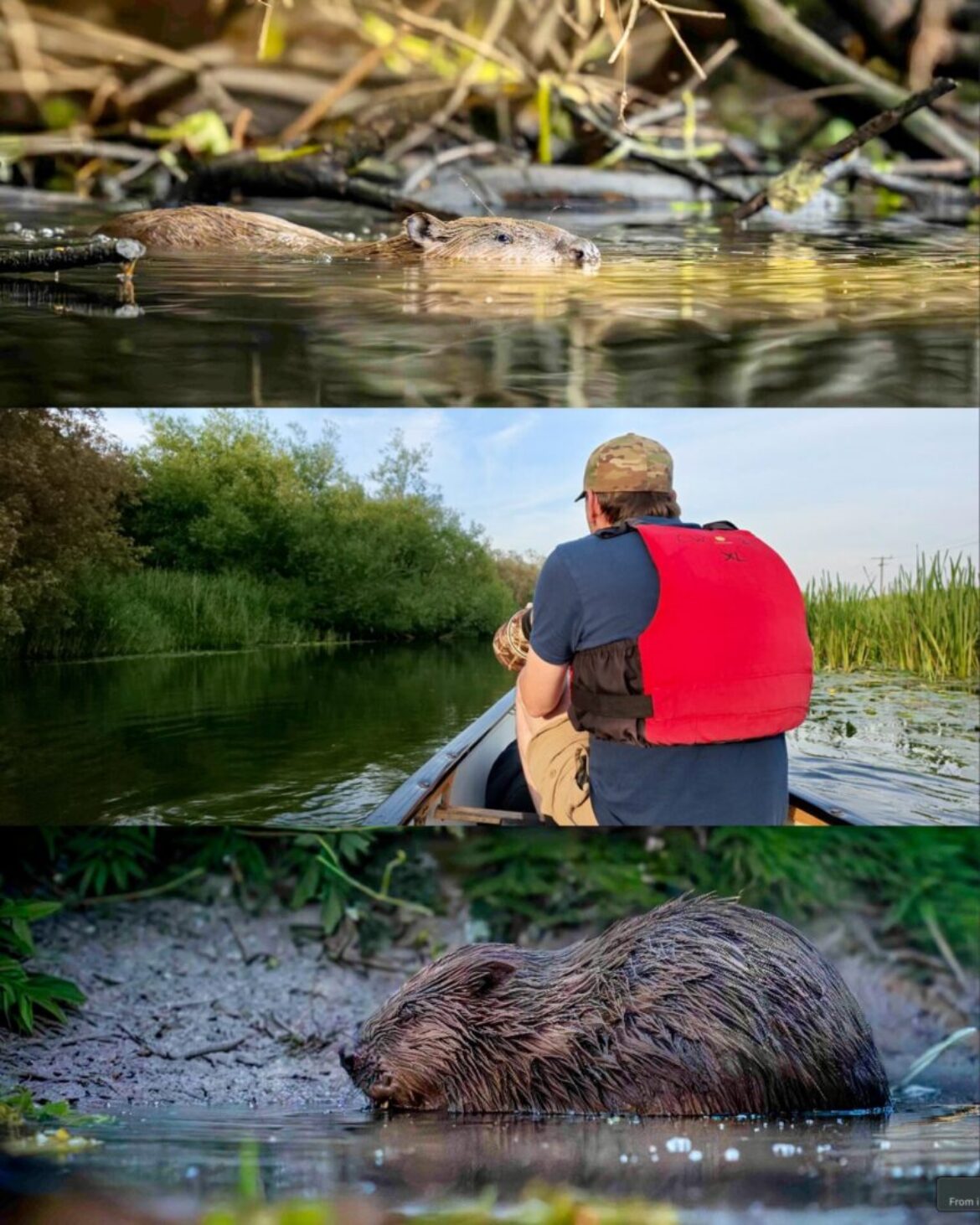
As the canoe drifted silently along one of England’s rare chalk rivers near Canterbury, Kent, every bend revealed something new. Willow trees stretched over the water, their branches trailing just above the surface, dragonflies skimmed across the current and then a ripple in the water, revealed a stunning beaver.
I couldn’t believe my eyes at first; I’d heard stories about beavers in this area, but seeing one in person was different entirely. According to locals, these beavers weren’t part of an official reintroduction programme. The story goes that they escaped from a nearby wildlife park during flooding years ago, and quietly, almost secretly, established themselves here. More than a decade later, they’re thriving, reshaping the river in the most natural way imaginable.
One moment I’ll never forget was the unmistakable crack of a tail slap echoing across the water. It was sudden, powerful, and echoed through the riverbank. Despite what many people think, it isn’t used to hit predators – that’s a myth. The tail slap is an alarm signal – one powerful slap warns nearby beavers of danger before they disappear beneath the surface, often leaving you staring at nothing but ripples and the memory of their presence.
Beavers (Castor fiber) are semi-aquatic rodents perfectly adapted to river life. These engineering marvels can stay submerged for up to 15 minutes, diving to depths of several metres to feed on aquatic vegetation and fell trees. Their hind legs are webbed, their tail is flattened like a rudder, and their front teeth never stop growing but are constantly worn down by gnawing bark and wood. They’re solitary or live in small family groups, and they’re incredibly territorial, communicating through tail slaps, scent marking, and vocalisations.
Later that evening, watching them feeding on fresh willow, using those incredible front paws almost like tiny hands, gripping and manipulating the bark with remarkable dexterity, I was struck by a realisation. I wasn’t there simply to photograph a beaver, I had been lucky enough to spend an evening in their world.
The canoe I had hired from Canoe Wild, kept me low on the water, non-threatening and silent. I shot these moments using the Sony α1 with a 600mm GM lens at 1/1600 sec, f/5.6, ISO 800 settings that allowed me to capture detail without disturbing them, but honestly, the images matter less than the experience.
Chalk rivers are rare and precious habitats in England, and beavers are reshaping them in ways that benefit the entire ecosystem; improving water quality, creating wetland habitats, slowing water flow. Whether officially reintroduced or quietly reclaimed through escape and survival, their presence here is a quiet triumph.
As I paddled away from the willow trees, the water still rippling from the tail slap, I realised this is why I do this. Not for the perfect shot, but for those moments when you step into another world and remember what it feels like to truly be there.
Register for my newsletter to receive workshop updates, the latest tuition, talks and presentations, as well as insights into where I will be travelling next and what I will be hoping to photograph!