• HOME
  • PR & Sponsorship
  • Galleries
    • Macro
    • Landscapes
    • Animals & Wildlife
    • Sports
      • Snowsports
      • Team Sports
  • SHOP
    • Lightroom Presets
    • Prints
    • Clothing
  • WORKSHOPS
  • PRESS
  • Collaborations
  • BLOG
    • Nature & Wildlife
    • Latest News
    • Tutorials
    • Workshops
  • Contact
  • HOME
  • PR & Sponsorship
  • Galleries
    • Macro
    • Landscapes
    • Animals & Wildlife
    • Sports
      • Snowsports
      • Team Sports
  • SHOP
    • Lightroom Presets
    • Prints
    • Clothing
  • WORKSHOPS
  • PRESS
  • Collaborations
  • BLOG
    • Nature & Wildlife
    • Latest News
    • Tutorials
    • Workshops
  • Contact
Crowned in the Pines – Photographing the Crested Tit
3 March 2026
in Blog+Nature

Crowned in the Pines – Photographing the Crested Tit

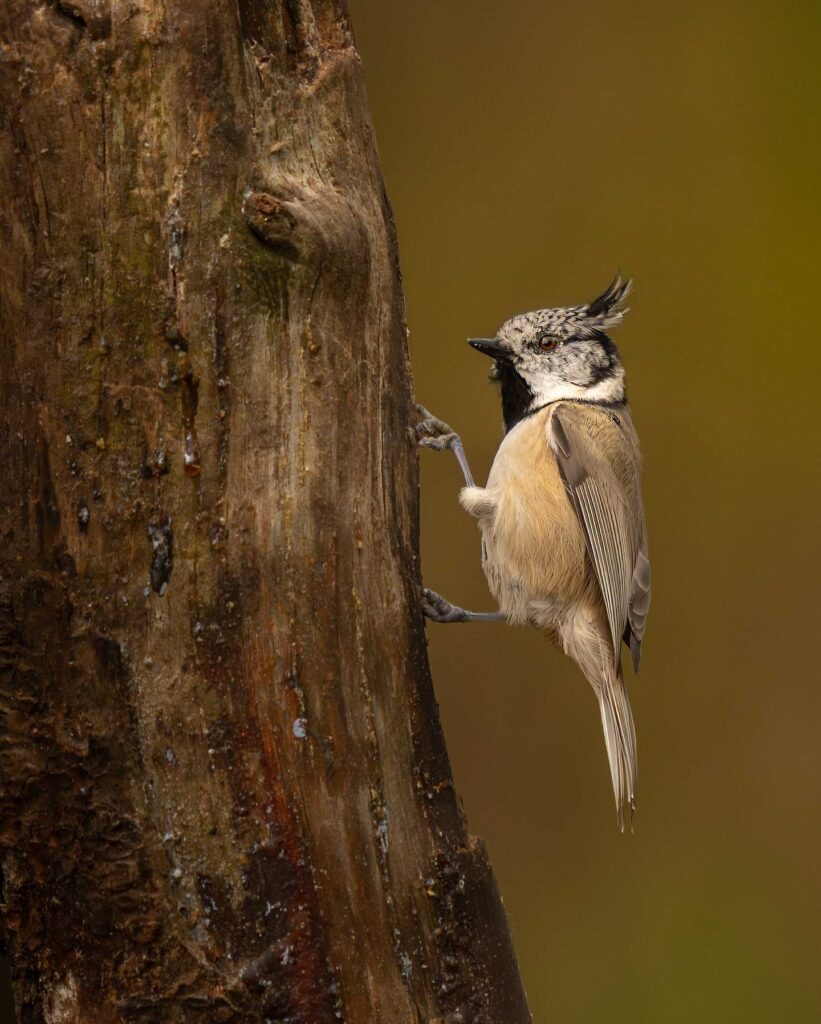
On my last trip to Estonia (one of those trips that serves you with incredible moments before you’ve even had time to process them properly), I encountered my very first ever crested tit.

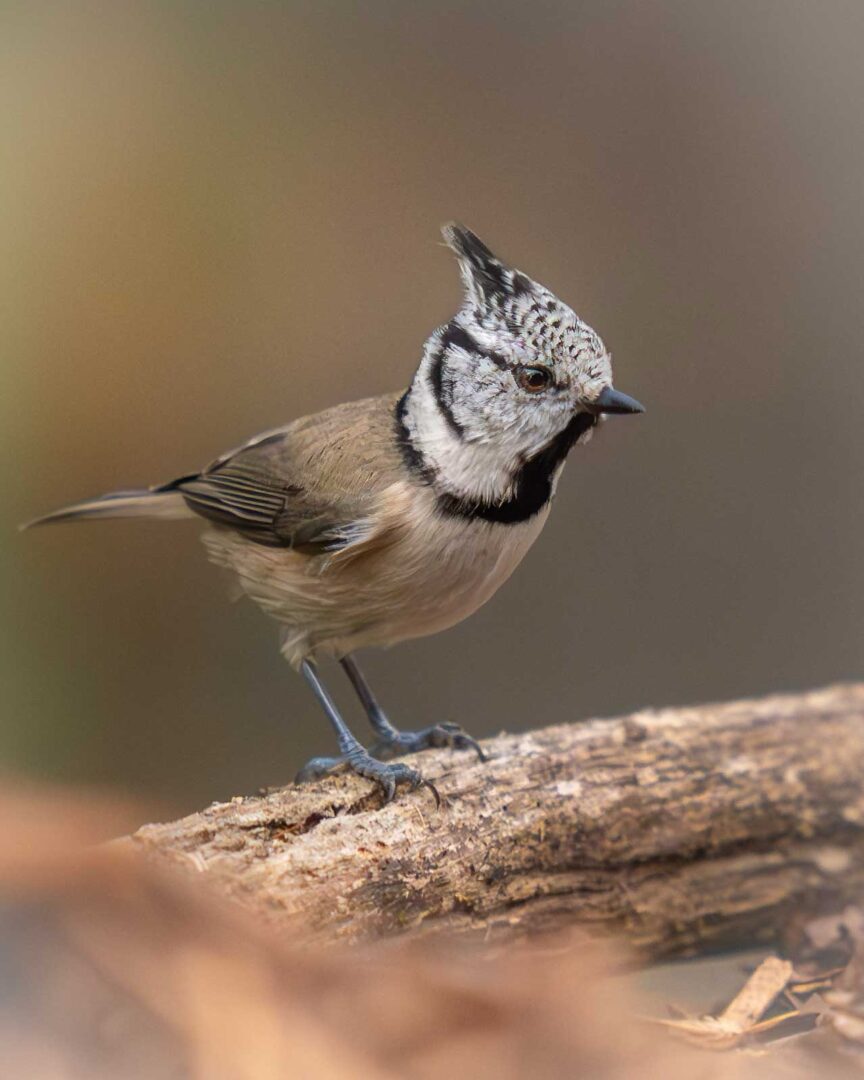
The Crested Tit (Lophophanes cristatus) is a bird I’ve wanted to photograph for years. In the UK, they’re largely confined to the ancient Caledonian pine forests of Scotland and are extremely rare elsewhere, so for most of us in England they’re more of a hopeful daydream than a realistic target. To see them properly and to photograph them up close in the Estonian forests, was unforgettable.

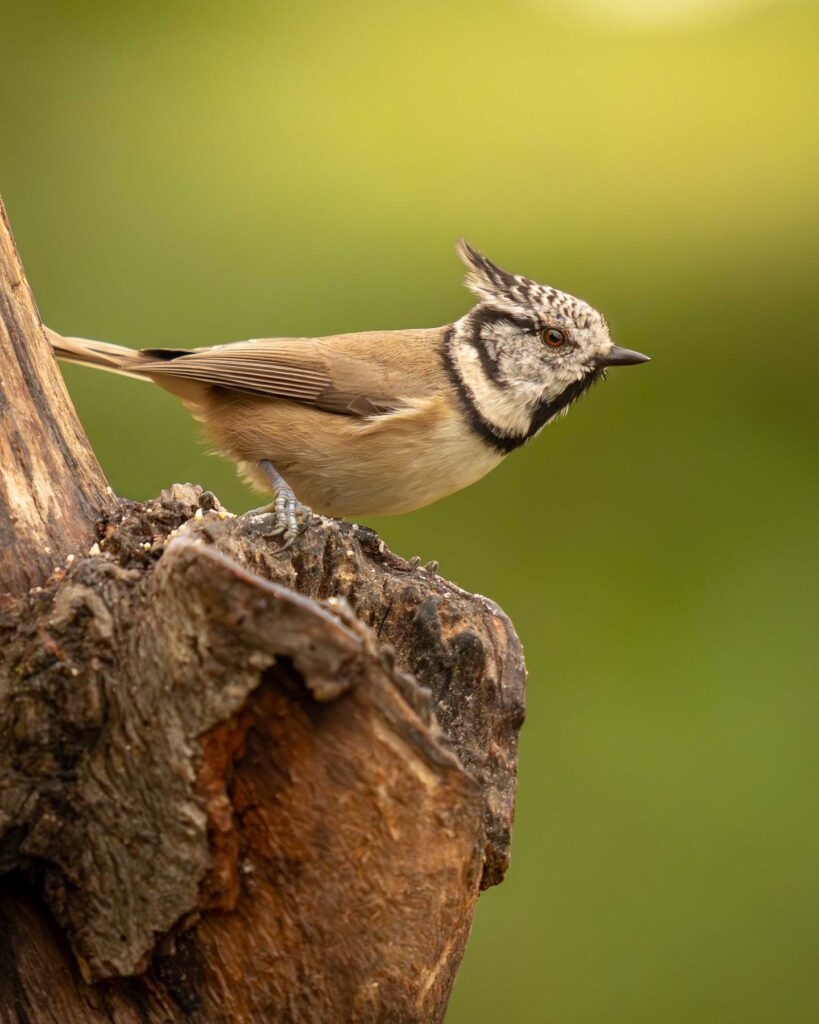
There’s something wonderfully characterful about them. That sharp black-and-white crest gives them a permanently alert expression, almost punk-like in appearance. Combined with their bold facial markings and soft buff underparts, they stand out despite being relatively small. They’re not much larger than a blue tit, but they carry themselves with real presence.

Crested tits are closely associated with mature coniferous woodland, particularly Scots pine forests. They favour old-growth areas with plenty of natural cavities, as they nest in tree holes and sometimes excavate their own nesting sites in rotten wood. Outside the breeding season, they often join mixed tit flocks, moving quickly and methodically through the canopy in search of food.

Their diet shifts with the seasons. In spring and summer, they feed largely on insects and spiders, gleaning them from bark and needles. In autumn and winter, they turn to seeds, especially pine seeds, and are known to cache food for later, tucking it away in bark crevices. Watching them bounce energetically along branches, constantly active and rarely still, you quickly realise they don’t make photography easy.

The Estonian forest setting felt perfect for them. Tall pines, filtered light, and that quiet stillness you only get in northern woodland. The birds moved fast, dipping in and out of view, giving me brief windows to lock focus and react. Wildlife photography in these situations is about anticipation rather than reaction, watching behaviour patterns, predicting the next landing spot, and being ready before the opportunity presents itself.

When one finally paused on a branch at eye level, crest raised and backlit by soft morning light, it was one of those moments where everything aligns for a second. That’s all you need.

I photographed this encounter using the Sony α1 II paired with a 400mm GM lens, shooting at 1/2000 sec, f/2.8, ISO 2000 to freeze their rapid movement in the low forest light. The images were later refined in Lightroom, keeping the tones natural to reflect the cool, muted feel of the woodland.

Trips like this remind me why I travel for wildlife. Sometimes you go looking for one thing and come home with something entirely different. And sometimes, you finally meet a species you’ve admired from afar for years.

For me, this crested tit will always mark a special first – a small bird with a big presence, crowned in the quiet of the pines.

Share This Post Facebook Twitter Pinterest
Prev Post Whispers in the Reeds – Photographing the Bearded Reedling
Next Post Feathers and Families – Photographing the Great Crested Grebe
You may also like
Photographing Red Deer In Great Britain
29 March 2023
in Nature

Photographing Red Deer In Great Britain

Photographing Red Deer In Great Britain Red deer (Cervus Elaphus) GB population 350,000Height 110-120cm Weight unto 225kg Lifespan
Capturing the Magic of Kingfishers: A Photographer’s Passion by a River in Hampshire
10 December 2024
in Blog+Nature

Capturing the Magic of Kingfishers: A Photographer’s Passion by a River in Hampshire

If you’ve been following my photography journey for a while, you might have noticed one bird that consistently appears in my
Where to photograph Atlantic Puffins in the UK
29 March 2023
in Blog+Nature

Where to photograph Atlantic Puffins in the UK

Where to Photograph Atlantic Puffins in the UK Atlantic puffin (Fratercula artica) GB Population 580,000 pairsLength 26-29cm Wings
Categories
  • Blog
  • Nature
  • Tutorials
  • Workshops
Featured Posts
Passing on the Photography Flame
2 June 2026
Fleeting Encounters – Photographing the Short-eared Owl at Bempton Cliffs
6 May 2026
Feathers and Families – Photographing the Great Crested Grebe
10 April 2026
Crowned in the Pines – Photographing the Crested Tit
3 March 2026
Whispers in the Reeds – Photographing the Bearded Reedling
30 January 2026
After the Storm – Photographing the Eurasian Oystercatcher
8 December 2025
GET SOCIAL

INSTAGRAM
@paulbrowning.photography
@snowboard.paul
@macro.paul

X
@paul__browning_

FACEBOOK
@paulbrowning.photography
@snowboardpaul
@macro.paul.surrey

Get in Touch

+44 7956 644 415

info@paulbrowning.photography

Terms & Privacy Policy
Refund Policy

Find me on Insta

GET SOCIAL

INSTAGRAM
@paulbrowning.photography
@snowboard.paul
@macro.paul

X
@paul__browning_

FACEBOOK
@paulbrowning.photography
@snowboardpaul
@macro.paul.surrey

Latest Posts
Photographing Red Deer In Great Britain
The Grey Seals of St.Ives, Cornwall
The story of the little owl and how it arrived in England
© 2023 Paul Browning Photography. All Rights Reserved. Web Design by Kraft Space.

Sign up to our newsletter

Register for my newsletter to receive workshop updates, the latest tuition, talks and presentations, as well as insights into where I will be travelling next and what I will be hoping to photograph!